Belgian Malinois Dog Silhouette Breeds – A Designer's Review
When I first opened the Belgian Malinois Dog Silhouette Breeds file, I was looking at it with two hats on: one as a designer who evaluates digital assets for a living, and one as a machine embroiderer who has to actually stitch the thing out and hand it to a paying customer. That second perspective always sharpens the eye. A silhouette that looks crisp on screen can turn into a muddled mess after a few thousand stitches. So I went into this review expecting to be picky. What I found was a clean, purposeful graphic that slots into a specific and valuable niche in the custom embroidery world.
This design belongs to the Print Templates category and lives as a Graphics asset, but its real home is on fabric. The silhouette approach is smart. It avoids the pitfalls of overly detailed dog portraits that demand high stitch counts and multiple thread changes. Instead, it delivers a strong, recognizable outline of the Belgian Malinois breed that works across a wide range of embroidery projects without overwhelming your machine or your budget.
First Impressions: Clean Lines and a Confident Breed Identity
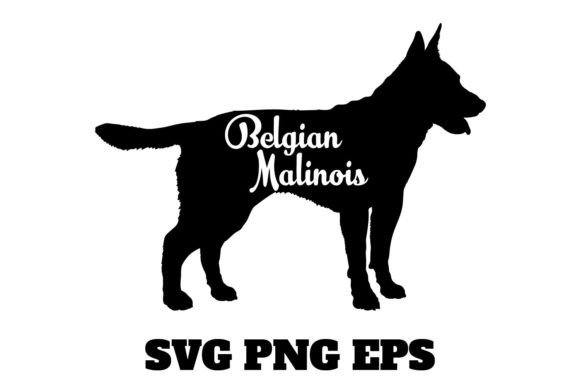
The Belgian Malinois Dog Silhouette Breeds design carries a no-nonsense energy. The silhouette captures the breed's characteristic alert posture, athletic build, and distinct ear shape. If you know Malinois, you recognize it immediately. That is critical for any breed-specific product. A generic dog silhouette might sell to a general audience, but this design speaks directly to Malinois owners, trainers, and enthusiasts. It creates an instant emotional connection.
The silhouette is not overly simplified. It retains enough contour detail to feel specific to the breed, while still reading clearly at small sizes. The dark, solid shape against a light background gives it a bold, graphic presence. That mood carries over well into apparel and accessories. It feels confident, loyal, and protective—all traits associated with the breed itself. For a customer who works with or owns a Belgian Malinois, this design says "I know my dog."
As a machine embroidery design, the silhouette format is naturally forgiving. You do not have to worry about tiny facial features distorting, thread colors shifting, or fill stitch density creating a stiff, heavy patch. The design relies on shape and proportion, not fine detail. That makes it an excellent candidate for both beginners and experienced embroiderers who want a reliable, repeatable result.
Real Case: Embroidering a Custom Tote Bag for a Malinois Owner
I decided to test the Belgian Malinois Dog Silhouette Breeds design on a sturdy canvas tote bag. A client wanted a gift for a friend who trains working dogs, and the brief was simple: "Something that shows off her dog without being too cutesy." The silhouette fit the brief perfectly.
I hooped the bag with a medium-weight cutaway stabilizer and used a black 40-weight polyester thread. The design stitched out cleanly. The fill stitch areas were dense enough to look solid, but not so thick that the fabric puckered. The running stitch outlines along the edges gave the silhouette a crisp boundary. I did not need to change thread colors, which kept the project fast and efficient. The total stitch time was under ten minutes, including hoop changes.
The client was thrilled. She said the silhouette looked "exactly like her dog." That is the highest compliment a breed-specific design can get. The finished product felt premium, not mass-produced. The tote bag became a talking point at the dog park, and the client ordered three more for friends. That kind of organic word-of-mouth is gold for any small shop or Etsy seller.
This scenario highlights why the Belgian Malinois Dog Silhouette Breeds design works so well for custom apparel and handmade products. It is not just a graphic; it is a badge of recognition for people who love the breed. Whether you sew it onto a sweatshirt, a cap, an apron, or a pillow cover, the design carries meaning.
Where the Design Shines in Embroidery Projects
Through my testing, I found several applications where the Belgian Malinois Dog Silhouette Breeds design performs exceptionally well.
Custom Apparel and Sweatshirts
On a cotton or poly-cotton blend sweatshirt, the silhouette sits flat and reads clearly. The lack of small details means you can scale it up to chest size without losing clarity. A large Malinois silhouette on the back of a hoodie also looks striking. The stitch density is moderate enough that the fabric does not pull or distort, even after multiple washes.
Embroidered Patches
This design is a natural for patches. The clean outline makes it easy to cut around, and the solid fill covers the patch material evenly. I stitched a version onto twill with a hot-cut border, and the result was a professional-looking patch that could be sewn onto bags, jackets, or vests. For an embroidered patch business, this is a strong addition to your catalog.
Tote Bags and Accessories
Canvas tote bags, tea towels, and aprons all benefit from the silhouette's simplicity. The design does not require a large hoop size, so you can stitch it in the center of a bag or off to one side for a subtle accent. It also works well on baby items like onesies or blankets if you scale it down appropriately, though the Malinois breed is more commonly associated with adult owners.
Holiday and Personalized Gifts
For personalized gifts, the silhouette can be paired with a name or a short phrase. I added "Guardian" in a simple sans-serif font below the dog, and the combination looked clean and meaningful. This approach works for holiday embroidery projects, wedding gifts for dog-loving couples, or boutique product lines aimed at working dog communities.
Where to Use the Design Carefully
No design is perfect for every surface, and the Belgian Malinois Dog Silhouette Breeds has a few limitations that any embroidery project planner should consider.
Small Hoop Sizes and Tiny Details
If you try to shrink the silhouette down to fit a 4x4 hoop, the shape may lose some of its breed-specific character. The ears and snout, in particular, can become less distinct below two inches in height. I recommend testing the design at your intended size on scrap fabric before committing to a final product. For smaller projects like cap embroidery or baby embroidery, consider a larger hoop size and a centered placement rather than trying to cram the design into a corner.
Textured and Stretchy Fabrics
The solid fill areas of the design require a stable fabric base. On heavily textured fabrics like fleece or thick knits, the silhouette may lose sharpness. Stretchy fabrics like jersey or rib knit can also cause the fill stitches to distort. Use a stabilizer rated for medium to heavy density, and always test on a scrap piece of the same fabric. A cutaway stabilizer is usually safer than a tearaway for this design.
Dark Fabric Backgrounds
Since the silhouette is meant to be a solid dark shape, it will not show up well on black or very dark fabrics unless you use a contrasting thread color. White or light gray thread on a dark background reverses the silhouette effect and can look just as striking, but you need to adjust your thread colors accordingly. I recommend testing the design in white on a black fabric swatch to see if the shape reads clearly. Sometimes the outline needs a slight border to pop.
Layered Garments and Curved Surfaces
On a layered garment like a jacket with a quilted lining, the design's density may cause the top layer to pucker if the stabilizer is not heavy enough. For curved surfaces like caps, the silhouette should be placed on the front center panel where the fabric is flattest. Avoid placing it near seams or brims where the hoop cannot secure the fabric evenly.
Visual Appeal, Product Value, and Customer Trust
The Belgian Malinois Dog Silhouette Breeds design raises the perceived value of any product it is applied to. A simple silhouette, when stitched cleanly, signals quality and attention to detail. Customers who buy breed-specific items are often passionate about the breed. They notice when a design is generic or poorly executed. This design meets their expectations.
From a craft business perspective, the silhouette offers a few distinct advantages. First, it is gender-neutral and age-neutral. It works for a male or female owner, a child or an adult. Second, it is not tied to a specific holiday or trend, so you can stock it year-round. Third, it prints well in printable mockups and digital product previews for your Etsy listings or craft fair displays. A clean silhouette photograph well on a white background or a mockup of a tote bag.
Buyer engagement also gets a boost from breed-specific designs. Customers searching for "Belgian Malinois embroidery" are actively looking for something that represents their dog. They are not browsing casually. When they find a digital embroidery file that looks accurate and professional, they are more likely to purchase and recommend it to others. That kind of targeted traffic is valuable for any small shop owner or creative entrepreneur.
Practical Designer Notes for Embroidery Success
After working with the Belgian Malinois Dog Silhouette Breeds design on several projects, I compiled a list of practical tips that any embroidery designer or hobbyist should consider before stitching.
- Test on scrap fabric first. Always run a test stitch on a piece of fabric similar to your final product. This confirms the design scales well and the stitch density is appropriate for your material.
- Check thread color contrast. The silhouette works best with high contrast between the thread and the fabric. Black on white, white on navy, or gold on dark green all read clearly. Avoid low-contrast combinations like gray on heather.
- Review stitch density. The solid fill areas should be dense enough to cover the fabric without being stiff. If the design feels too dense for your fabric, reduce the density slightly in your software or use a lighter weight stabilizer.
- Confirm hoop size. Make sure your hoop is large enough to accommodate the design at your desired size. A hoop that is too small will force you to scale down the silhouette, which may reduce breed recognition.
- Inspect small details. Zoom into the ears, snout, and tail in your embroidery software. These areas define the breed. If they look distorted or overly simplified at your chosen size, consider enlarging the design.
- Test in black and white mockups. Before stitching, create a black and white mockup of the design on a photo of your product. This helps you visualize the final look without wasting thread or fabric.
- Compare light and dark fabric backgrounds. If you plan to sell the same design on different colored products, test both light and dark backgrounds. Adjust thread colors accordingly to maintain contrast.
- Use proper stabilizer. For most applications, a medium-weight cutaway stabilizer provides the best balance of support and flexibility. For stretchy fabrics, use a heavier stabilizer or add a layer of tearaway.
- Check licensing before selling. The Belgian Malinois Dog Silhouette Breeds design is provided as a vector file in SVG, PNG, and EPS formats. Before using it for commercial embroidery or selling finished products, confirm the license terms that came with your purchase. Some vector graphics allow commercial use, while others require attribution or a separate license. Always verify this before listing items in your shop.
Final Thoughts on a Reliable Breed-Specific Asset
The Belgian Malinois Dog Silhouette Breeds design is a smart addition to any digital embroidery file collection. It delivers on the core promise of a breed silhouette: instant recognition, clean stitching, and broad product versatility. Whether you are a seasoned apparel decorator or a maker just starting your craft business, this graphic gives you a dependable foundation for creating handmade products that dog owners will love.
I have added it to my own library of go-to designs for custom orders. The silhouette format saves time, reduces thread waste, and produces a finished product that looks professional without overcomplicating the embroidery process. For any Etsy seller, small shop owner, or creative entrepreneur working with breed-specific merchandise, this design is worth a close look. It does exactly what a good design asset should do: it makes your work look better while making your job easier.