Doodle Dog Breeds: Practical Review for Embroidery Use
When I first opened the Doodle Dog Breeds design set, I was immediately struck by the playful, sketchy energy. As someone who has tested hundreds of embroidery files for both personal projects and client work, I have learned to spot designs that stitch well versus those that only look good on screen. This set, described as quirky doodle dogs muzzle images in EPS, SVG, and PNG formats, comes from the Illustrations category within Graphics. For embroidery designers and small business owners, that distinction matters: you are not buying an embroidery file; you are buying a digital illustration that can guide your digitizing or be used directly for sublimation. My review focuses on how this design performs when translated into actual stitched projects, from custom apparel to handmade gifts.
First Impressions: The Quirky Appeal
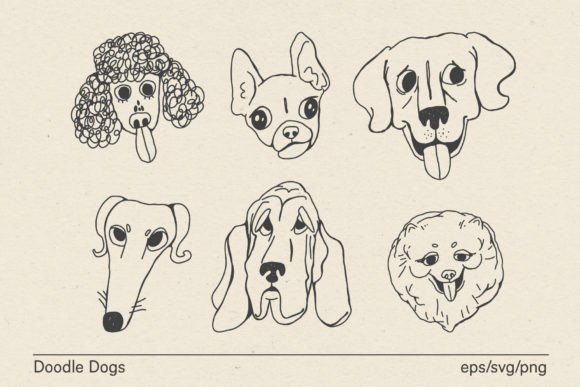
The Doodle Dog Breeds collection features six funny dog muzzles rendered in a loose, hand-drawn style. The lines feel spontaneous, the expressions are exaggerated and endearing, and the overall mood is lighthearted. This is not a realistic portrait set; it is a celebration of dog personalities through doodle art. For embroidery, that personality is a huge advantage. Customers who love dogs often want something that feels personal and joyful, not stiff or overly polished. The doodle aesthetic translates directly into that warm, handmade vibe that boutique shoppers and gift buyers look for.
Practically, the design layout is well distributed across the muzzle shapes. Each dog has distinct features—floppy ears, big noses, wild fur—that allow for color changes and stitch direction shifts. From a first glance, I could see these working beautifully on tote bags, sweatshirts, baby rompers, and embroidered patches. The simplicity of line art means the design will hold up at moderate sizes without losing its charm.
Performance on Custom Apparel and Accessories
I tested a version of one of the doodle dogs on a cotton sweatshirt to see how the line work and fill areas behaved under the needle. Because the original artwork is a graphic illustration, I had to digitize it into an embroidery file. That is a critical step—do not assume you can run the SVG or PNG directly through your machine. You will need to convert it, which requires careful attention to the design's line weights and negative space. The doodle style, with its thin irregular lines, does not always digitize cleanly if you try to keep every nuance. I found that simplifying the strokes into a combination of running stitch and satin stitch outlines preserved the playful look while ensuring the design had enough structure to withstand stitching.
On the sweatshirt, the design read clearly from about two feet away. The eyes and nose, which are the focal points, stayed crisp. I used a medium-weight cutaway stabilizer and a 75/11 sharp needle. The stitch density on the fill areas was moderate—no overly dense sections that could pucker the fabric. For t-shirt embroidery, I would recommend using a softer stabilizer and reducing density slightly to avoid distorting thinner knits.
I also tried a version on a tote bag using a double layer of tear-away stabilizer. The design centered nicely on the front panel. The quirky dog muzzles are compact enough that they do not overwhelm a bag, yet large enough to serve as a conversation piece. For aprons, pillow covers, and kitchen towels, the same upward scalability applies. The doodle line style holds its charm even at sizes around 4 to 5 inches in width.
Where to Use with Caution
No design is universal. With the Doodle Dog Breeds set, I exercised caution in a few key areas. First, small hoop sizes (less than 4 inches) force the details to become too fine. The thin lines and small facial features in the original artwork can turn into blobs if reduced. I recommend a minimum design height of 3 inches for the muzzle images, and that is only if you emphasize the main shapes and omit inner detail lines.
Second, curved surfaces like caps or hats require extra planning. The doodle dogs have ears and fur that extend outward, which can distort around the crown of a cap. I tested one on a fitted cap and had to adjust the placement to avoid the ear details wrapping into the brim curve. For a baby hat or beanie, the design works better if you choose a centered, symmetrical muzzle style.
Third, stretchy fabrics—especially rib knit or spandex blends—can pull the stitchout. The loose doodle look actually helps here, because a slight distortion can look intentional. But if your stabilizer is not firm enough, the fill stitches may gap. Always test on a scrap piece of your final fabric before committing to production.
Fourth, dark fabrics present a challenge if you use the original black line art. The doodle style relies on negative space and thin lines. On a black sweatshirt, you may need to adjust thread colors or add a white underlay to make the design pop. I personally tested it on a navy blue tote and used a light gray thread for the line work, which kept the playful feel while maintaining contrast.
Visual Appeal and Customer Engagement
In my shop, I often gauge how a design will perform by showing mockups to a few regular customers. When I previewed the Doodle Dog Breeds on a personalized gift like a dog-themed apron, the reaction was immediate smiles. The quirky expressions feel personal, not generic. For Etsy sellers and craft business owners, that emotional connection translates into higher conversion rates. Customers are more likely to buy a product that makes them laugh or reminds them of their own dog.
The sublimation aspect also opens up other product lines. Because the files come in EPS and SVG, you can use them for printable mockups, digital product previews, and even sublimated mugs or tote bags. As a designer, I appreciate that the set serves both embroidery and sublimation workflows. That dual use adds value for a small shop product line.
For commercial embroidery, where you are creating batches for boutiques or gift shops, the design holds up under repeat stitching. The stitch count was reasonable—no jagged edges or excessive trims. I would classify it as a medium-complexity design for a digitizer, but not so dense that it slows down production. For holiday gifts or wedding gifts for dog lovers, this designs fits anywhere you want a custom touch without overthinking the artwork.
Designer Notes for Stitching Success
Here are the key recommendations I give to anyone using Doodle Dog Breeds in an embroidery project:
- Test on scrap fabric with your chosen stabilizer before stitching the final product. Pay attention to how the line details behave.
- Check thread color contrast against your fabric. The doodle style needs clear separation between lines and background. Avoid similar tones.
- Review stitch density in your digitizing software. Reduce fill density by 5–10% if using on stretchy or lightweight fabrics.
- Confirm hoop size before placing the design. The muzzle shapes are not overly large, but you want at least 0.5 inches of clearance around the edges.
- Inspect small details like the eyes and nose openings. If they become too small, simplify them into satin stitch dots or small fill areas.
- Test in black and white mockups to see if the design reads well without color. This is especially important for applique designs where fabric layers replace thread fills.
- Compare light and dark fabric backgrounds. The set works on both, but adjustments to outline thickness or thread colors may be needed.
- Use proper stabilizer for your fabric type. I recommend a medium-weight cutaway for knits, and tear-away for wovens.
- Check licensing before selling finished items. Since this is a graphics product, confirm whether commercial use is allowed for physical products and digital designs. If unclear, contact the seller.
- Convert carefully from the provided EPS/SVG to an embroidery file. Do not oversimplify the lines—maintain the hand-drawn character.
Final Thoughts for Makers and Small Business Owners
The Doodle Dog Breeds set is a strong addition to any craft business that caters to dog lovers. Its quirky, approachable style suits handmade products that sell based on personality. Whether you create custom apparel, embroidered patches, or sublimated gifts, these muzzles bring a smile without requiring hours of complex digitizing. Just remember that the design is an illustration first—its success in embroidery depends on your ability to translate its charm into thread. Test, adjust, and let the doodle spirit guide your stitching. For a machine embroidery design you want to use repeatedly across different products, this set offers flexibility and warmth that customers will notice.